
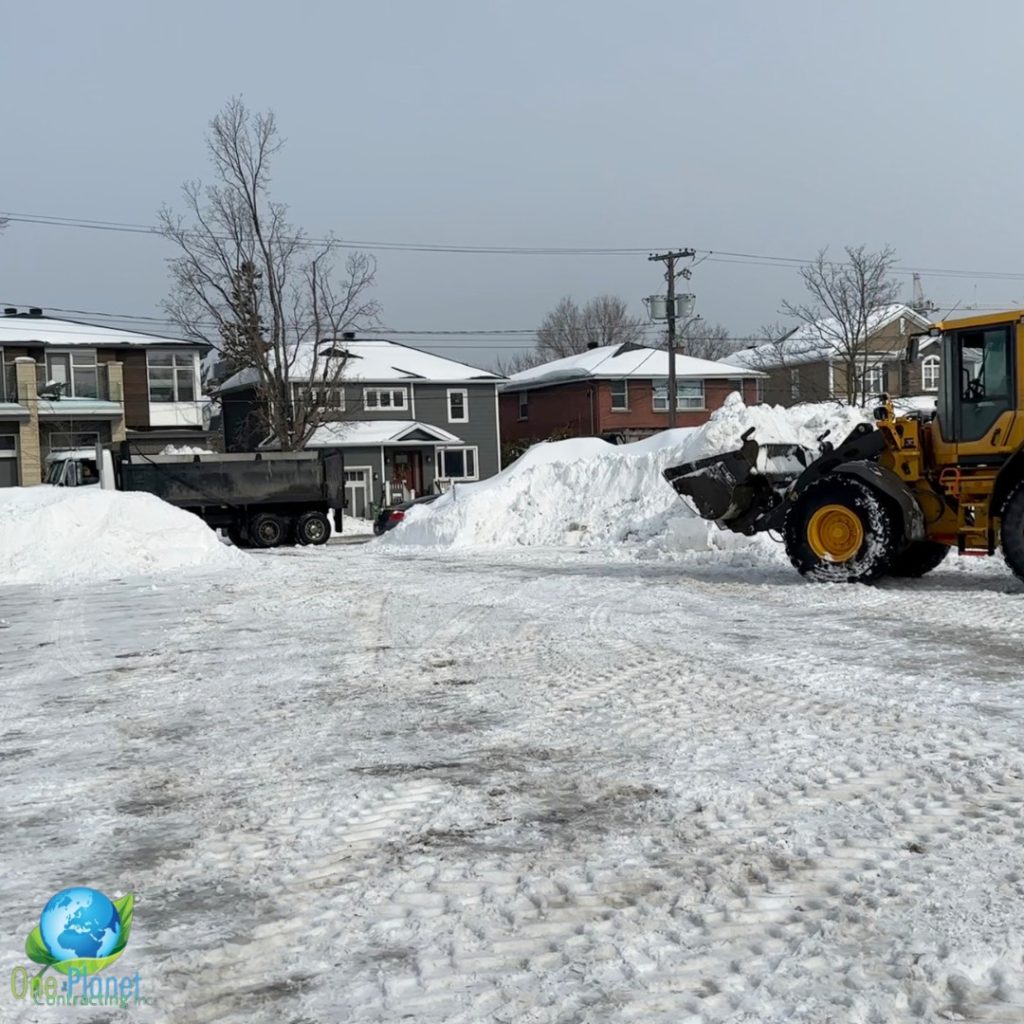
Most people think snow removal ends when the plow clears the lot — but the reality is very different. What truly determines the long-term health of a commercial property in Ottawa is where the snow goes after it’s pushed aside. Snow pile placement is one of the most overlooked areas of winter property management, yet it has the biggest impact on pavement longevity, drainage performance, landscaping survival, and overall site safety.
Over the years, I’ve learned that improper snow pile placement can destroy turf, weaken asphalt, create major flooding during spring thaw, block visibility lines, and lead to dangerous overnight icing. That’s why I follow a precise, strategic method for managing snow piles on every commercial property I maintain in Ottawa, Barrhaven, Kanata, Nepean, Stittsville, and surrounding areas.
Below, I break down exactly how I approach snow pile placement to protect parking lots, preserve landscaping, and keep commercial sites safe throughout the entire winter season.
Understanding Why Snow Pile Placement Matters
Before explaining my process, it’s important to understand why placement is so crucial.
Poorly placed snow piles can cause:
- asphalt cracking and premature deterioration
- major spring flooding and pooling
- refreeze zones that create black ice
- damage to turf, shrubs, and garden beds
- blocked lines of sight for drivers and pedestrians
- restricted parking spaces
- obstructions near emergency exits and loading docks
- salt-heavy runoff that kills landscaping
Snow piles are not harmless. They must be planned and managed just as carefully as the rest of winter operations.
1. Planning Snow Pile Locations Before Winter Begins
Before the season even starts, I walk each property and plan where snow will be stored all winter long. Commercial sites, especially busy ones in Ottawa, don’t have the luxury of guessing on storm day.
During my pre-winter assessment, I identify:
- natural drainage routes
- low-traffic zones
- open spaces with safe visibility
- locations away from entrances
- areas that won’t block fire lanes
- zones that can handle heavy snow weight
- safe distances from landscaped beds
A well-chosen snow pile location prevents half of the problems property owners usually face in winter.
2. Keeping Snow Away from Entrances, Walkways, and High-Traffic Zones
The biggest mistake I see contractors make is pushing snow toward:
- building entrances
- customer walkways
- drive lanes
- loading docks
- handicap-accessible spaces
These areas refreeze the fastest and are the highest-risk zones for pedestrians. I design all plowing routes to pull snow away from these areas so meltwater never flows toward foot paths or doorways.
This one step drastically reduces slips, falls, and liability.
3. Using the Natural Slope of the Property to Guide Meltwater
Ottawa properties rarely have perfectly flat parking lots. Every lot has natural slopes and dips — and I use them to my advantage.
I evaluate:
- where water flows during thaw
- which parts of the lot freeze in shade
- how meltwater drains into catch basins
- where pooling is most likely to occur
By placing piles in spots where meltwater can flow naturally toward drainage systems, I prevent the freeze–thaw buildup that causes black ice.
4. Keeping Snow Piles Away from Landscaping and Turf
Excess snow kills plants. The combination of weight, salt, and constant moisture causes:
- crushed shrubs
- rotted turf
- soil compaction
- broken branches
- dead perennials
- damaged root systems
Whenever possible, I position piles far from landscaped beds and off lawn edges, especially at commercial plazas and condo complexes where landscaping investment is high.
If space is limited, I create protective barriers to shield plantings from salt-heavy runoff.
5. Maintaining Safe Sightlines for Drivers and Pedestrians
Snow piles can become massive on commercial properties — and if placed in the wrong location, they block visibility from:
- intersections inside the parking lot
- pedestrian crossings
- storefront frontages
- parking stalls
- rear delivery lanes
I always ensure piles are:
- low enough or positioned away from corners
- far from pedestrian walkways
- not obstructing vehicle turning radiuses
- out of driver sightlines
This prevents dangerous blind spots during peak business hours.
6. Managing the Weight and Size of Piles Safely
Large commercial properties produce enormous volumes of snow through the season. Piles get heavy, deep, and tightly compacted over time.
To manage this safely, I:
- rotate plowing angles to distribute weight
- avoid stacking so high that piles become unstable
- push piles back early in the season to save space
- use loaders when necessary to reposition or reduce pile height
Proper pile management prevents collapse, melting hazards, and property damage.
7. Avoiding Blocked Catch Basins and Drainage Channels
Snow piles placed on or near drainage points create massive problems during thaw:
- water backs up
- ice sheets form overnight
- entire sections of the lot flood
- asphalt deteriorates faster
- safety hazards multiply
I always keep snow well away from catch basins. As piles melt, water must have a clear path to drainage.
This step alone prevents many slip-and-fall incidents.
8. Using Salt-Safe Pile Zones to Reduce Runoff Damage
Salt from winter operations eventually ends up in snow piles. When spring comes, that salt releases into the surrounding area.
To protect soil, asphalt, and landscaping, I place piles in salt-safe zones that:
- allow controlled runoff
- prevent toxic water flow into garden beds
- reduce salt saturation of the pavement
- minimize environmental impact
- eliminate unnecessary turf damage
This sustainable approach saves landscaping budgets and protects infrastructure long-term.
9. Relocating or Reducing Piles Mid-Winter When Necessary
Some winters in Ottawa produce so much snow that piles begin interfering with operations. On those properties, I schedule mid-season:
- snow relocation
- snow reduction using loaders
- re-stacking piles for better drainage
Large commercial sites can’t afford blocked parking stalls or overflowing meltwater. Adjusting piles throughout the season keeps properties fully functional.
10. Documenting Snow Placement for Safety and Liability Protection
I document every snow pile location and provide property managers with:
- photos
- maps
- written notes
- hazard alerts
If a spring thaw causes unexpected issues, this documentation helps us respond instantly and protects property owners from liability.
Why My Snow Pile Management System Works in Ottawa
My technique works because it is built around Ottawa’s climate and commercial property demands. It focuses on:
- drainage
- safety
- visibility
- landscaping protection
- liability reduction
- long-term pavement health
- storm-cycle monitoring
Poor snow pile placement creates preventable problems — my system eliminates them before they start.
Let Me Manage Snow Pile Placement for Your Ottawa Property
If you want a safer, cleaner, more professional winter experience for your commercial site, I’m ready to help. Proper snow pile placement protects your:
- parking lot
- landscaping
- customers
- employees
- long-term maintenance budget
- property value
Let’s keep your property safe all winter long with strategic, responsible snow pile management.