
A large open parking lot and a tight commercial entrance need different clearing plans. The strongest winter proposal explains which equipment fits each part of the site, how operators will work around vehicles and where the snow will go as the season progresses.
For industrial snow plowing in Kanata North and commercial snow removal across West and Central Ottawa, OneBluePlanet starts with the property layout and service requirements. Blade width matters, but access, push distance, snow conditions and available storage help determine whether a loader, pickup or coordinated combination makes sense.
Where a loader can be a good fit
Wide parking areas, long internal lanes and suitable onsite storage can support efficient loader work. The advantage comes from organizing productive passes and moving snow toward a planned destination. A large machine still needs enough maneuvering room, suitable pavement and an operating plan around loading areas, parked vehicles and people.
OBP’s winter equipment planning includes a Case 621 loader configuration with an 18-foot blade that retracts to 12 feet, and a John Deere 324 configuration with a blade adjustable from 8 to 12 feet. Equipment assignment and availability are confirmed for the contract.
Adjustable blades offer useful flexibility. Metal-Pless describes hydraulic wing positioning and multiple carrier applications in its commercial plow range. The actual attachment, carrier compatibility and operating width must be checked for the equipment being assigned.
Where a pickup truck still earns its place
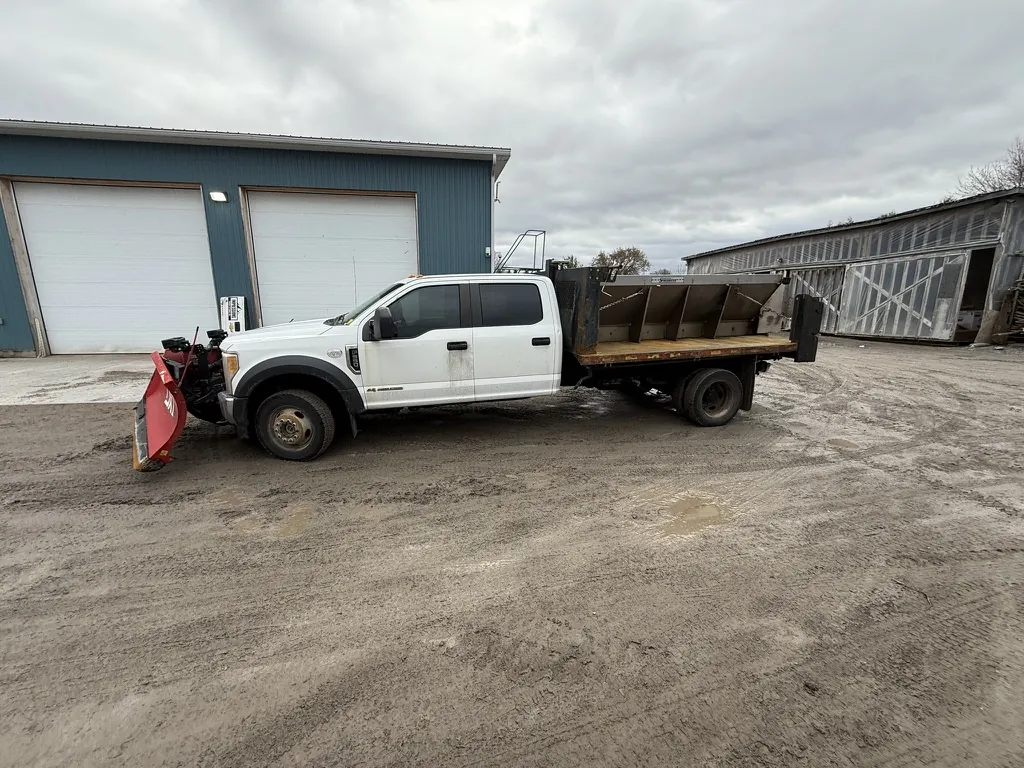
A pickup can be a practical choice for smaller properties, dispersed stops, narrow access or targeted follow-up. It can also support salting and crew logistics when equipped for those tasks. That flexibility helps a mixed fleet cover smaller stops and areas with tighter access while loaders concentrate on suitable larger sites.
The question for a property manager is whether the assigned equipment can meet the agreed scope within a feasible route. A large loader is not automatically the right answer for a confined lot, just as a pickup is not automatically the best choice for a large open industrial site.
How two loaders can work together
On a suitable property, the larger loader can handle broad clearing passes while the smaller loader works tighter areas or follows a planned cleanup sequence. Clear division of the work helps operators avoid repeating passes or getting in each other’s way.
The timing estimate must account for both operators, both machines, transitions between work areas and the actual storm conditions. Tandem operation should be validated against completed service records. A broad-area production assumption should not become a guaranteed completion time for every snowfall.
Plan storage and drainage before the first event
Ask where snow may be stacked, which parking stalls must remain available and when relocation or offsite removal becomes necessary. Loading docks, sightlines, emergency access and pedestrian routes belong on the same site plan.
Drainage also deserves attention. The City of Ottawa’s flood-control guidance explains the role of keeping catch basins open for melting snow. For a commercial property, consider drainage access and meltwater routes when selecting storage areas and follow-up priorities.
Separate clearing, ice management and documentation
The winter proposal should identify parking-lot clearing, sidewalks, entrances, salt or ice-melter applications, inspections and any hauling requirements. A wide blade does not remove the need for a separate ice-management plan. Service triggers, weather response and follow-up requirements should be written into the agreement.
For contracts using our YETI service reporting, available visit records can include timestamps, service notes and photographs, with GPS or geofencing data where captured. The exact reporting requirements, photo coverage and client access should be agreed in the contract; a missing GPS point must not be represented as proof that a visit did or did not occur. These records can help property teams review completed work and follow-up needs.
A practical equipment and scope checklist for property managers
Before comparing seasonal prices, mark each work area on the site plan. The lowest equipment rate does not necessarily mean the lowest total site cost or an achievable service window.
- Open pavement: identify drive aisles, parking stalls, loading bays and actual plowable area; note parked vehicles, curb islands and push distances before selecting loader or truck coverage.
- Sidewalks: measure clear widths and turning areas. Where paths are wider than approximately 60 inches and access is suitable, assess a dedicated sidewalk machine; narrower or obstructed routes may need snow blowers or hand crews.
- Stairs, landings and tight entrances: separately count hand-clearing tasks instead of assuming a loader or sidewalk machine can service them.
- Ramps and sensitive areas: record slope, weight limits, surface type, overhead clearance and pedestrian access. Match equipment and ice-treatment methods to those constraints.
- Snow storage: identify permitted stacking zones, drainage and fire routes, lost parking capacity, and whether onsite relocation or offsite hauling is included or billed separately.
- Service and accountability: specify snow-depth triggers, priority areas, freezing-rain treatment, salt or ice-melter scope, inspections, reporting and how additional visits will be handled.
A quote should distinguish pavement plowing, walkway clearing, ice management and hauling. For more tender questions, see our Ottawa commercial snow-removal checklist.
What to send with a Kanata North snow inquiry
Send the property address, site plan, RFP or scope, hours of operation, pedestrian priorities and any restrictions on snow storage. Include the proposed contract term and deadline. We can then review the equipment mix and prepare a proposal around the actual property.
Explore OneBluePlanet’s commercial snow and ice services, review our commercial snow-removal checklist for Ottawa property managers, or request winter pricing. For a coordinated seasonal program, see our 365-Day Commercial Property Care Bundle.